Renewable Energies
Sector’s key figures
A SKILLED POOL OF TALENT AND RENOWN HIGHER EDUCATION
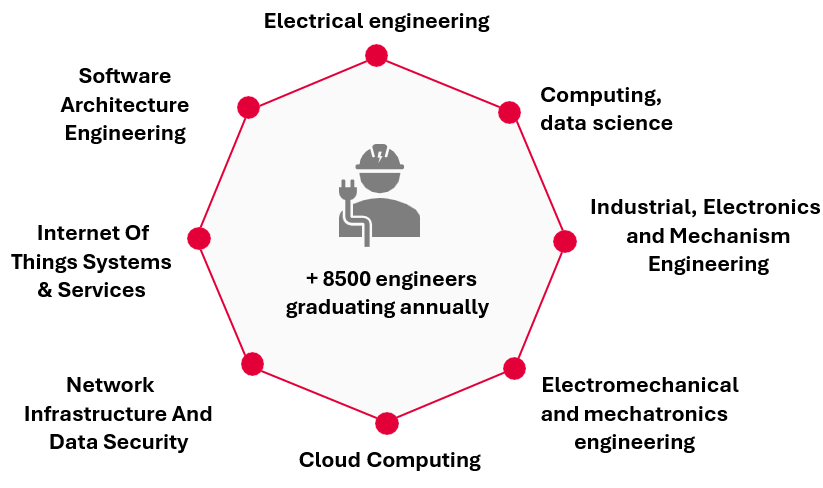
The country harness its large highly skilled pool of talents of more than 8500 engineers graduating annually to address the need of the industry

HIGHLY SKILLED TALENT
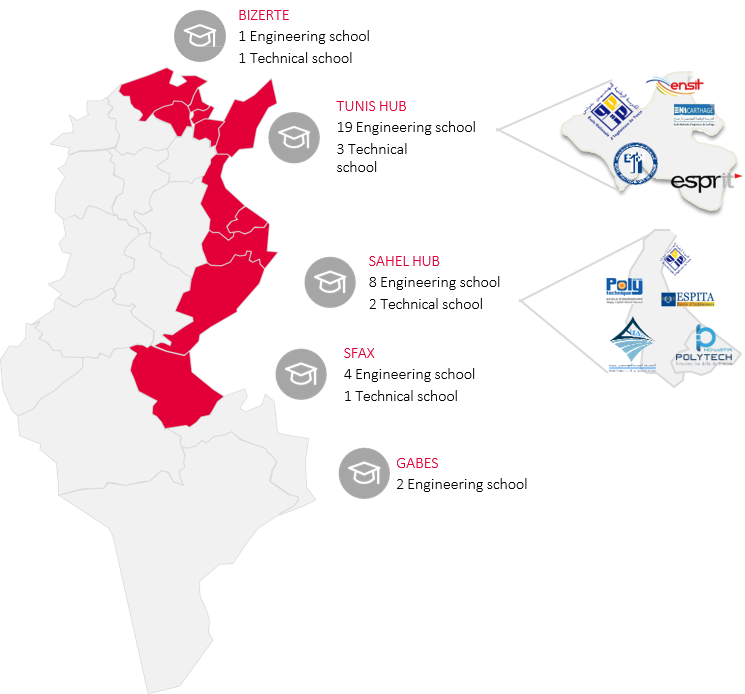
- More than 300.000 students enrolled in universities in 2024 including
- +48.000 in engineering and technical fields
EDUCATIONAL HUBS
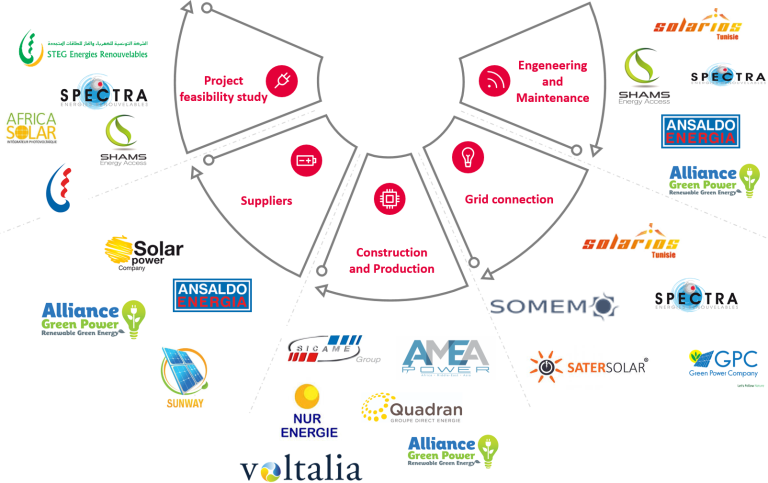
A WIDELY DEVELOPED ECOSYSTEM
A wide range of national and international companies are currently operating in Tunisia’s ecosystem sector
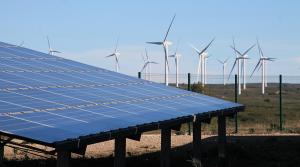
Many suitable sites for installing wind farms.
Wind speeds exceed 7 meters per second (m/s) at a height of 80 meters in Bizerte and Nabeul, the central region, as well as in the southern areas
Solar resources exceed 3,000 hours per year.
More than 3,200 hours/year in most southern governorates
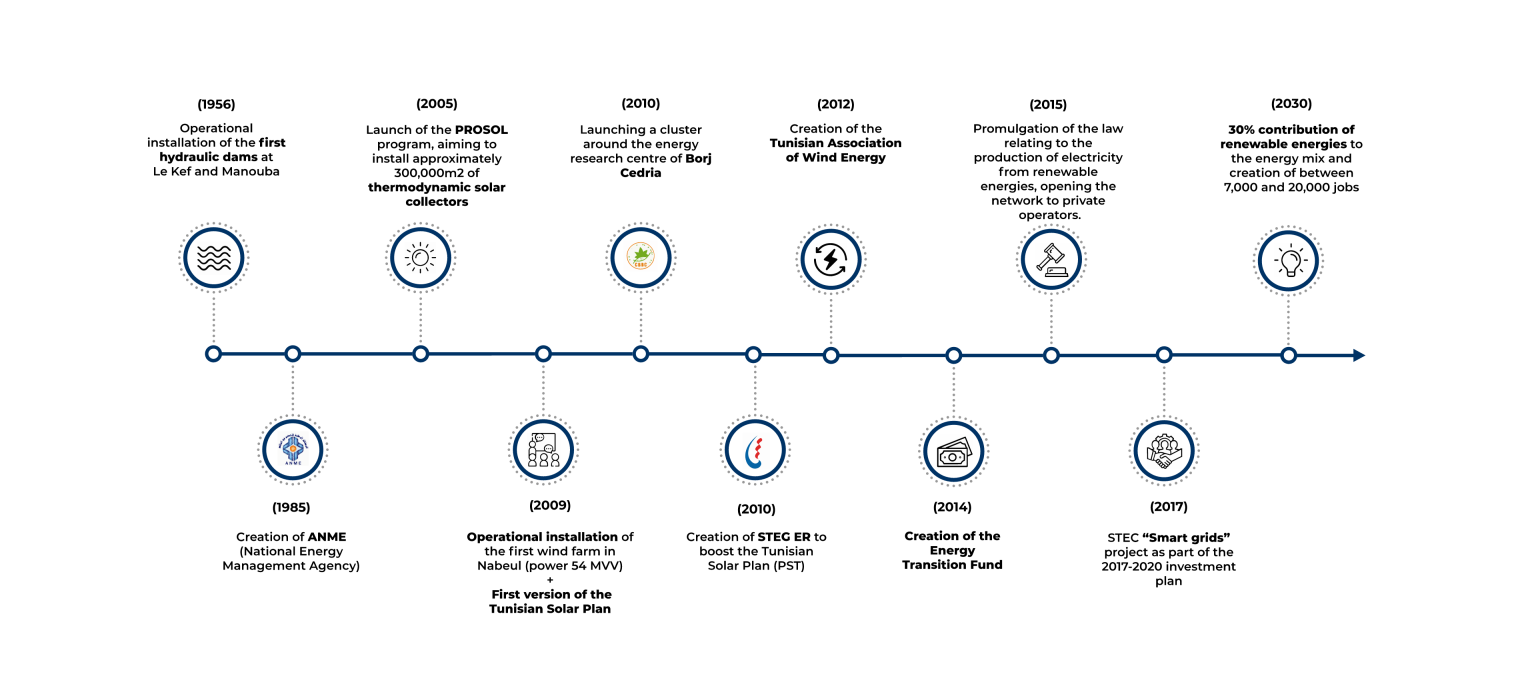
The legislative framework regulating electricity generation from renewable energy: Law No. 12 of 2015
TARGETED NICHES: 4,850 MW of electricity from renewable energy by 2030
SOLAR POWER GENERATION
WIND POWER GENERATION
SEAWATER DESALINATION
BIOMASS ENERGY GENERATION
CARBON CAPTURE
ABUNDANT RENEWABLE ENERGY RESOURCES - WIND POWER
Tunisia’s wind map illustrates the existence of several suitable sites for wind farms – The most interesting sites (speed exceeding 7 meters per second (m/s) at 80 meters height) are found in the regions of Bizerte and Nabeul, in the central region and in the southern regions
/ WIND MAP OF TUNISIA
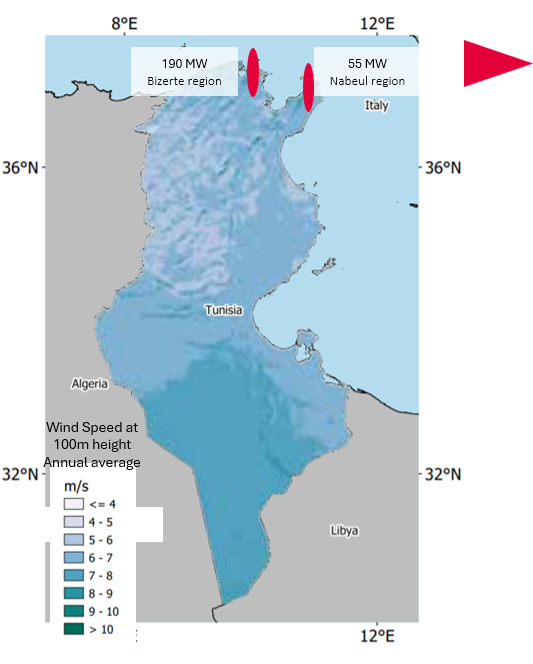
Current installed STEG wind project
Sources : The national agency for energy management, World Bank (solar Atlas & wind Atlas)
© 2021 Tunisia Investment Authority
/ WIND POWER POTENTIAL
- The total area available for wind power development is estimated to be about 32 200 km². The gross wind energy potential in Tunisia is estimated at more than 8 000 MW
This potential does not consider potential development opportunities in offshore wind
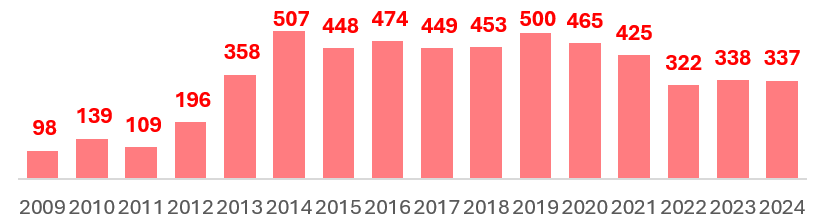
ELECTRICITY GENERATION OF WIND FARMS (GW HOURS) 2009 –2024
- Tunisia’s wind generation development began in 2001, when STEG brought online a wind farm at the Sidi Daoud site in the northeast (Nabeul region), with an initial capacity of 10 MW and later expanding to 55 MW in 2008
STEG launched two other wind farms in 2012 at the sites of Metline and Kchabta (Bizerte region). Together they account for a total of 143 wind turbines with a total capacity of 190 MW
ABUNDANT RENEWABLE ENERGY RESOURCES – SOLAR POWER
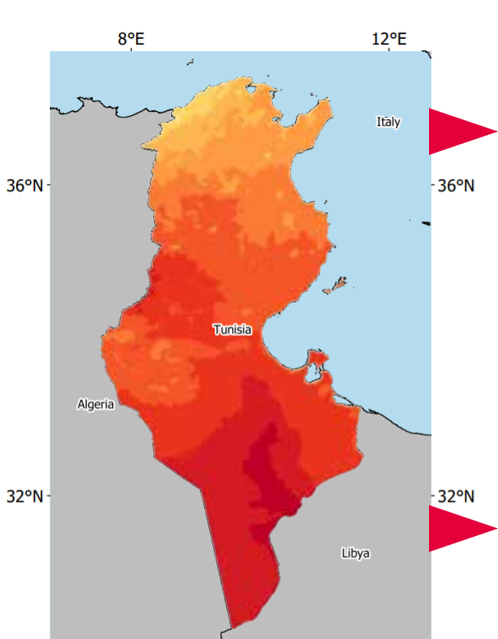
Tunisia has solar resources exceeding 3000 hours/year, although hours of sunshine vary throughout the different regions – Most of the southern provinces have a solar exposure time of more than 3 200 hours/year, with peaks of 3 400 hours/year on the south coast (Gulf of Gabes)
/ TUNISIA SOLAR IRRADIATION
Sources : The national agency for energy management, World Bank (solar Atlas & wind Atlas)
© 2021 Tunisia Investment Authority
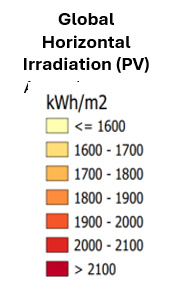
- Global horizontal irradiance is a reliable resource measure for solar PV installations. The daily average global solar irradiance is between 4.2 kWh/m2 /day in the northwest of Tunisia and 5.8 kWh/m2 /day in its far south
- With these favorable conditions, the productivity of PV solar systems in Tunisia is very high. According to IRENA’s Global Atlas, annual electricity production by PV solar systems varies between 1 450 kWh per kilowatt-peak (kWp) in the northwest region and 1 830 kWh/kWp for systems installed in the extreme southeast region
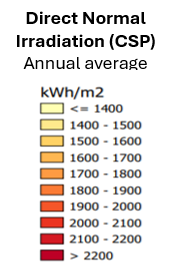
- Direct normal irradiance (DNI) is the main parameter for evaluating the potential for concentrated solar power (CSP) technology. Generally, the DNI should be at least 2000 kWh/m2 /year to provide a viable energy yield
- In Tunisia, direct solar irradiation in the south and in most of the central region exceeds this typical DNI value. The DNI in some regions of the extreme southeast of Tunisia can reach a value of 2 300 kWh/m2 /year